

Pointillism, a revolutionary painting technique, transforms small dots of color into breathtaking images.
Developed in the late 19th century by Georges Seurat and Paul Signac, this method initially faced skepticism but later became a cornerstone of Neo-Impressionism and Post-Impressionism.
Artists meticulously placed unmixed colors to create depth and vibrancy, captivating audiences with its unique visual effects.
In this article, we’ll explore ten iconic pointillist paintings that showcase the brilliance of this technique.
From Seurat’s masterful “A Sunday Afternoon on the Island of La Grande Jatte” to Signac’s serene “Maisons du port Saint-Tropez,” these works not only define the movement but also influenced generations of artists.
Join in as we delve into the stories behind these masterpieces and the creative minds that brought them to life.
1. Sunday on the Island of La Grande Jatte – Georges Seurat
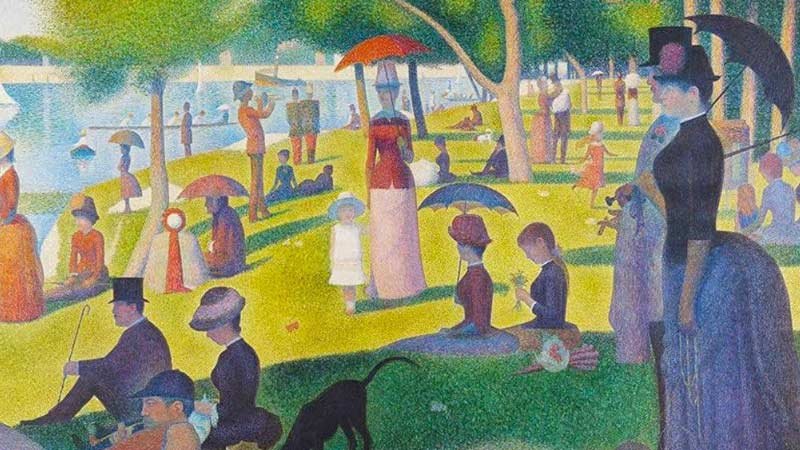
Georges Seurat’s A Sunday Afternoon on the Island of La Grande Jatte is a monumental work that exemplifies Pointillism.
Completed between 1884 and 1886, it depicts a park scene bustling with people enjoying a leisure day along the Seine.
Seurat painstakingly created around sixty studies and used countless small dots of color, merging them to establish a remarkable depth and vibrancy.
This painting not only marked the introduction of Pointillism but also captured the essence of Belle Époque Paris, making it an iconic masterpiece in art history.
2. Entrance to the Grand Canal, Venice – Paul Signac
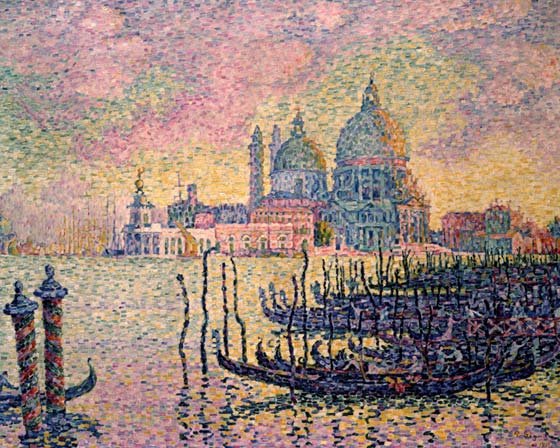
Signac’s “Entrance to the Grand Canal, Venice,” created in 1905, stands as a masterful example of Pointillism. The painting captures the enchanting cityscape with pastel shades, showcasing the interplay of light on water and the vibrant colors of the surrounding architecture.
Signac’s technique involved distinct dots of color that blend optically, creating a luminous effect. This work reflects his deep understanding of optics and his ability to evoke emotion through color, solidifying his role as a key figure in the Pointillism movement.
3. Children on a Farm – Camille Pissarro
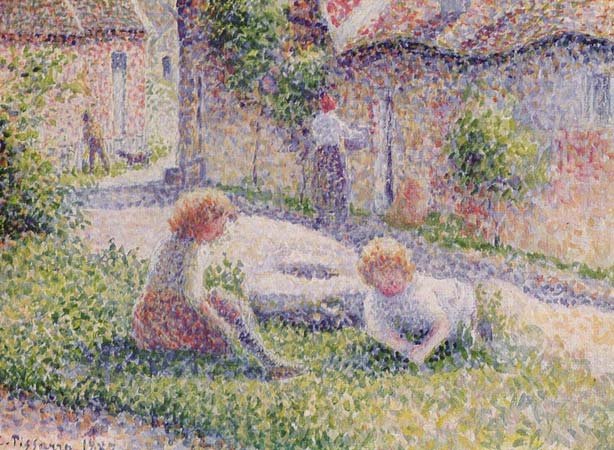
Camille Pissarro’s “Children on a Farm,” completed in 1887, exemplifies the essence of rural life through the lens of Pointillism.
The painting features a young boy and girl engaged in simple farm tasks, surrounded by the lush greenery of the landscape.
Pissarro employs small dabs of color to skillfully capture the sunlight filtering through the trees, illuminating the scene with warmth.
This piece highlights his extraordinary ability to portray light and shadow, making it a significant contribution to both Pointillism and Impressionism.
4. Portrait of Madame Charles Maus – Theo van Rysselsberghe
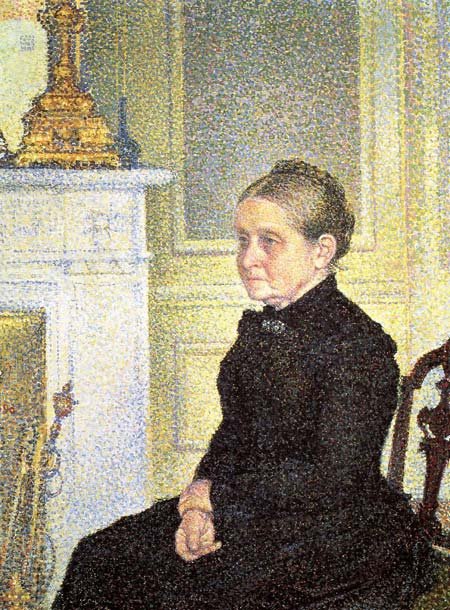
Theo van Rysselsberghe’s “Portrait of Madame Charles Maus,” painted in 1890, exemplifies Pointillism with its vibrant color application and intricate dot technique.
This artwork beautifully captures the essence of Octave Maus’s wife, showcasing her elegance and poise. He employs small, distinct strokes of color that blend harmoniously, creating depth and texture.
Displayed at the Musées Royaux des Beaux-Arts in Brussels, this portrait stands as a testament to van Rysselsberghe’s mastery in combining emotional expression with the innovative style of Pointillism.
5. L’Hirondelle Steamer on the Seine – Paul Signac
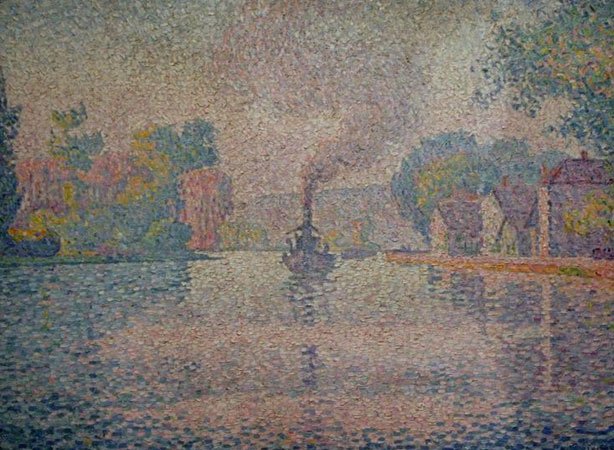
Paul Signac’s “L’Hirondelle Steamer on the Seine,” completed in 1901, epitomizes the charm of Parisian life through Pointillism.
Signac captures a unique perspective of the Seine as if viewed from another boat, inviting viewers into the scene.
He employs vibrant dots of color to convey the shimmering water and the interplay of light reflecting off the river’s surface.
This artwork showcases his mastery in depicting urban landscapes and highlights his connection to the scenic beauty of French waterways, solidifying his place among pointillist greats.
6. The port of Saint-Tropez – Maximilien Luce
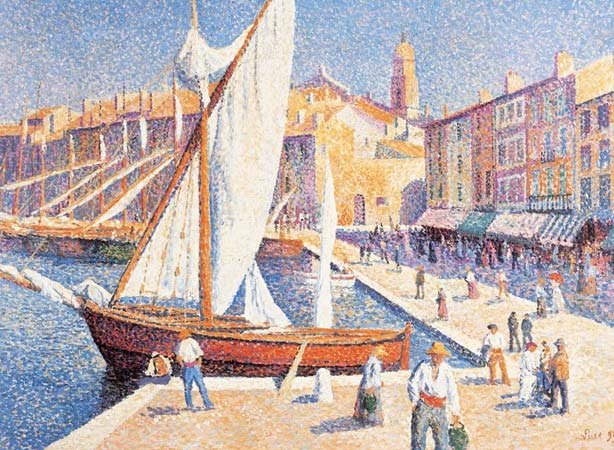
Maximilien Luce’s The Port of Saint-Tropez, completed in 1893, embodies the vibrant atmosphere of a bustling harbor.
Luce employs distinct pointillist techniques, using colorful dots to depict a sailing vessel anchored against the lively backdrop of the city.
His chosen palette radiates warmth, mirroring the sun’s heat as it bathes the scene. Luce’s animated strokes capture the essence of daily life, illustrating the human interactions along the port, making this artwork a quintessential example of his artistic prowess within the pointillism movement.
7. The Evening Air – Henri-Edmond Cross
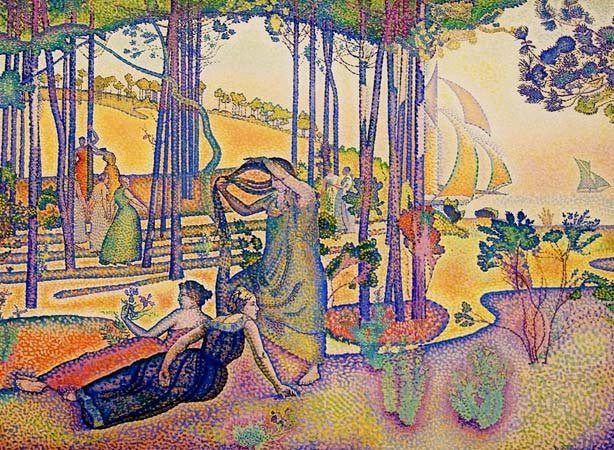
Henri-Edmond Cross created “The Evening Air” in 1894, showcasing a breathtaking coastal scene from southern France.
He employs vibrant colors and distinct pointillist dots to depict ships sailing against a radiant skyline. Cross captures the essence of the moment, reflecting his mastery of light and atmosphere.
This artwork exemplifies his pivotal role in the Neo-Impressionist movement, merging the techniques of Impressionism with pointillism to evoke emotions.
“The Evening Air” stands as a significant contribution, illustrating the dynamic interplay of color and form in Cross’s artistic journey.
8. Couple in the Street Charles – Charles Théophile Angrand
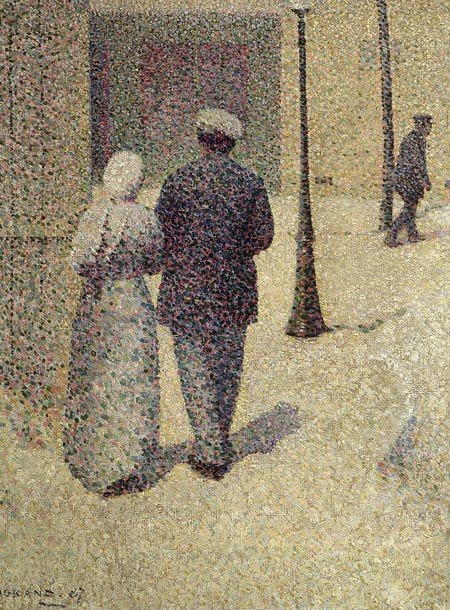
Angrand’s “Couple in the Street,” painted in 1887, stands out as a hallmark of Pointillism. He utilized a refined palette, combining muted tones with dots of color to create depth and subtle shadows.
The composition captures a couple leisurely strolling, infused with everyday life from late 19th-century France. Angrand’s unique approach produces a near monochrome effect, evoking a timeless quality akin to contemporary photography.
This artwork exemplifies the fusion of artistic techniques, showcasing Angrand’s understanding of light and shadow while marking his contribution to the Post-Impressionist movement.
9. Self-Portrait 1887 – Vincent van Gogh
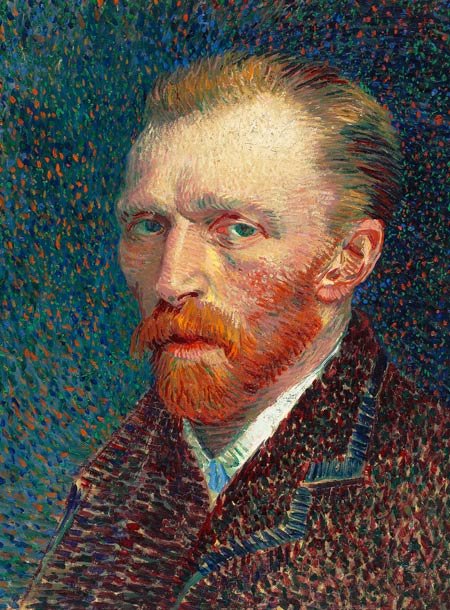
Vincent van Gogh’s “Self-Portrait 1887” showcases his exploration of Pointillism during a tumultuous period in his life.
He utilized vibrant colors, short brush strokes, and distinctive dots to convey emotion and depth. This work reveals the artist’s struggle with mental health while showcasing his evolving style.
The self-portrait echoes his search for identity, blending realism with the innovative technique that defines Pointillism.
It’s a poignant representation of the artist’s inner turmoil, making it a significant piece in the context of late 19th-century art.
10. Bridge in London – Jan Toorop

Toorop’s “Bridge in London,” completed in 1904, exemplifies the distinctive style of Pointillism. He employs a vibrant palette of colors, using small dots to depict a bustling London scene dominated by an intricate bridge.
Toorop captures the harmonious blend of nature and urban life, highlighting the movement and energy of the city.
The artwork showcases his innovative technique, emphasizing both light and shadow through meticulous color placement.
This masterpiece not only reflects Toorop’s artistic vision but also signifies his role in expanding the reach of Pointillism beyond its French origins.


